Status of Civic Spaces in Asia and the Pacific
Global Major Groups and Stakeholders Forum (GMGSF) on the Eve of the United Nations Environment Assembly (UNEA-7)
December 6-7, Nairobi, Kenya
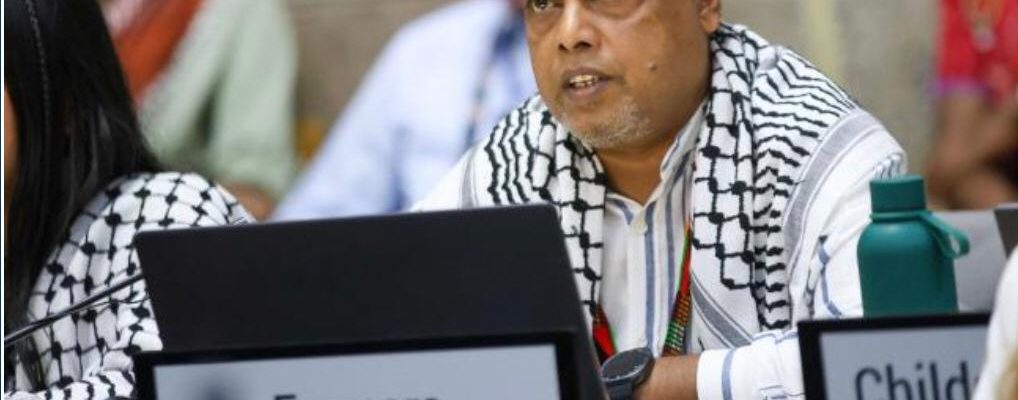
Wali Haider, Farmers Major Group
Across Asia Pacific, civic space is undergoing one of the most significant collapses in recent decades. What we are witnessing is not only the silencing of activists, journalists, workers, students, women, and Indigenous communities, but the emergence of a deliberate architecture of control that fuses national authoritarianism with global power structures. States across the region are tightening their grip through restrictive laws, expanded surveillance, and the criminalization of dissent, yet these national actions are inseparable from international economic pressures, geopolitical alliances, and the interests of powerful corporations and development finance institutions. The repression that suffocates democratic expression in Asia shares its foundations with the structures that enable the ongoing violent suppression of Palestinians. These are not parallel crises; they are interconnected symptoms of a global order that rewards obedience and punishes resistance.
In many countries, civic space is being restricted through tactics like: anti-terror and security laws used to detain those who speak out, digital identification systems that centralize state power, and internet shutdowns deployed during moments of political tension. Facial recognition and AI-enabled monitoring follow people into the streets and even into their personal digital spaces. Protest movements, community organizing, and student mobilizations are met with both force and sophisticated digital repression. Governments describe these measures as essential for “stability” and “development,” but their real function is to shield political elites, security establishments, and multinational corporate partners from accountability.
This authoritarian turn is not only maintained through force; it is reproduced through economic governance. Structural adjustment programs, austerity measures, and trade agreements imposed by global financial institutions create forms of repression that are less visible but equally devastating. IMF conditionalities erode social protection systems, push up fuel and food prices, deregulate labor markets, and privatize public goods. These policies leave millions struggling to survive, reducing their capacity to mobilize or challenge injustice. Trade regimes and investment protections disempower workers and farmers while strengthening corporations, making collective action more difficult. Meanwhile, development banks push mega-infrastructure projects that displace rural and Indigenous communities, whose opposition is often met with militarization and criminalization to protect the interests of investors. In this sense, austerity and debt are not simply economic policies; they are quiet instruments of political control.
The shrinking of civic space is deeply felt in Pakistan, India, Bangladesh, Nepal, Myanmar, Cambodia, Philippines, Palestine and many more countries including in the Pacific where communities across the country describe increasing pressure on public expression and organizing. Farmers resisting corporate seed regimes, water grabbing, or land acquisitions often confront both surveillance and intimidation. Women human rights defenders experience coordinated online harassment that spills into offline threats. Journalists reporting from rural areas, especially on land issues, local corruption, or corporate extraction face severe risks. Civil society organizations face arbitrary financial restrictions, red tagged and branded and labeled “anti-national,” placing them at risk of violence or extrajudicial killings.
This dynamic extends into multilateral spaces including the UN, where the voices of civil society especially grassroots, Indigenous, youth, women’s, and rural groups are increasingly marginalized. Financial support for participation has dwindled, while visa barriers, high travel costs, and restrictive accreditation procedures further limit access. Meanwhile, governments, corporations, and powerful institutions face few limitations, shaping agendas and influencing policy outcomes with ease. The exclusion of civil society from global platforms is not accidental; it serves to reproduce the inequalities and power hierarchies that define the broader geopolitical order.
The repression of civic space across Asia reflects a global system that normalizes authoritarianism as long as it aligns with strategic and economic interests. From Gaza to Kashmir, from Manila to Karachi, the pattern is clear: democratic participation is tolerated only when it does not threaten entrenched power. Global power brokers states, corporations, and finance institutions are not neutral arbiters of “stability”; they are architects of dispossession, profiting from the silencing and starvation of dissent. When multilateral forums reproduce the same extractive hierarchies they claim to solve, their language of “development” becomes a smokescreen for theft, violence, and impunity.
We will not be pacified by platitudes: expose the collaborators, strip power from profiteers of repression, and return voice, land, and dignity to the people.
When people are united will never be defeated!
From River to the sea Palestine will be free – Free Palestine